|
*Click on produce above for Recipes |
|||
Today’s CSA Box – Week of May 20, 2013
News From the Farm
Farms come in all different shapes and sizes. Some farms are all business, geared up for production. These farms have few frills or folderol, and they’re efficient in their own way, which means their way of growing one or two crops. These farms figure they better be efficient because if they aren’t it’ll probably spell trouble down the road.
In contrast, Full Belly Farm has never been efficient at growing one or two crops because we grow one or two hundred of them, and the facts about why and how we grow so many different things don’t come in a straight line. If you start to ask questions about the crops and their byproducts, the relation of one crop to another, the use of the crop on farm or off, or the ways that the pieces of the puzzle fit together, you are likely to be found quite a while later stewing in a tangled mix of philosophy, theory and straight-from-the-fields know-how.
At Full Belly we’re so excited about diversity – like our mix of flowers, vegetables, fruits, nuts, herbs and animal products – that we have even taken to thinking about our interns as “crops of new farmers” and our hedgerows as a way to grow “crops of pollinating insects!” It seems as if the “efficiency” here is more about the way that one thing builds upon another and how the whole relies upon the parts, than it is about yield per acre. However, it is hard to describe this clearly in the linear language of economics or agronomy where efficiency is usually measured in terms of the production of ONE crop per acre.
There are always times when the integration of the parts into a smoothly functioning operation will be tested and found wanting. The aphids will be out of control, as they were this spring. The Johnson Grass will take over a field of asparagus. We pick green garlic that the store sends back… Sometimes these misfires seem like the result of trying to do too many things at once, or a misbalancing of competing demands. Maybe these misfires happen just as often on other farms, or maybe not, there are probably different challenges.
The philosophy at Full Belly, the ideal that we strive for, is that reading and responding to the signals becomes less the ongoing and constant job of the farmers and more of a natural process that builds upon itself, improves with experience and sustains itself over time. We welcome all of your feedback and comments, and we are always glad to answer any questions that come up around your table! Blessings on your meals.
–Judith Redmond
Thank You Lois!

Palo Alto Market crew summer 2004. From the left: Laura, Lois, Jan, Dru, Tony, Catherine, Rich, Alex (Jan’s little brother who was visiting) and Ali (in front).
Full Belly Farm crew, owners and extended community were together on Sunday to celebrate and remember the life of Lois Rivers, mother to farmer Dru Rivers and grandmother to Amon, Hallie and Rye Muller, all of whom work at Full Belly. Lois has been working at our Palo Alto farmers market every Saturday for 30 years, including the market a few days before she died. Her 3 children, 9 grandchildren and 2 of her 3 great-grandchildren were there for the ceremony to tell wonderful stories about her life. Thank you Grandma Lois for all you did over the years for Full Belly Farm! We miss you so much!
June is Just Around the Corner
For uninterrupted fresh veggies, be sure to get your payment in on time!
Tuesday, Wednesday, Thursday & Friday – 4 boxes, $72, with flowers $102 (Home delivery – $100, with flowers $130.
Saturday – 5 boxes, $90, with flowers $127.50
As a reminder, we must receive your payment at least five days prior to your box delivery. Call our CSA office at 800-791-2110 with any questions, or to make payment with a credit card
Home/Office Delivery Now Available in Davis
Home or Office Delivery of Full Belly CSA boxes is now available in Davis. Please let your busy friends know! Deliveries will be on Wednesday afternoons. Home delivery boxes will cost $7.00 extra.
Lamb and Chicken Available
For those interested in our certified organic lamb we have a limited amount available for delivery to a CSA site near you. Sorry no home deliveries. Our lambs are all born and raised here at the farm and are fed 100% on pasture, organic vegetables and hay. They are sold by the half lamb (20 lbs) for $185, or whole lamb (40 lbs) for $350.
We also have soup chickens for sale. (Temporarily sold out.) These are 2-year old egg-laying birds frozen and packed with heads and feet, that are great for making broth, soup or stew. The cost is $10, delivered frozen to select CSA sites. Sorry no home deliveries. Please contact Becky – becky@fullbellyfarm.com – if you are interested.
Full Belly Farm Tour | June 2013
Come visit the farm for a walking tour on Saturday, June 1, 2013.

Join us for a farm tour at 11am and spend the day here at Full Belly. Bring a picnic lunch and see the farm in the early summer!
The tour is approximately 1 1/2 hours long and may involve walking in mud, jumping across a ditch or two or exposure to all kinds of farm animals and insects. The tour will not be cancelled in the case of rain. Bring practical shoes, a water bottle, a hat and other appropriate gear!
You are welcome to spend the entire afternoon at the farm, so bring a picnic lunch! Splashing in the creek is encouraged.
This tour is free and open to the public. The tours will leave from the main Full Belly office area at 11:00 am sharp. Please send your questions to Hallie.
News From the Farm
Our crops are all a bit ahead of usual for early May. Here you can see that our first planting of sweet corn is already knee-high and growing fast.

News From the Farm – Can Gardens Transform Detroit?
I was recently in Detroit for a food and farming policy meeting. While there, our group took a field trip to meet local leaders in the urban gardening and farm to school movement. On the way, looking out the windows of the bus, we saw abandoned, decaying homes, empty factories, the shell of a once-majestic train station and vacant lots.
Multiple problems led to Detroit’s current plight: Auto industry jobs moved elsewhere, the mortgage bubble burst and property values plunged, property tax revenues fell, and the city was not well managed. Now, having lost its ability to borrow money, the city is cutting services like transportation, street lighting, street maintenance, and fire and police protection. Once the fourth largest city in the U.S. with a population of 1.85 million, the population has plunged to 700,000.
Jeanne Killian posted on Full Belly Farm’s Facebook page:
It was hot last week so I looked up recipes for cold soups. Using a few as inspiration, I attacked my supply of Full Belly veggies. Chopped fresh onions and fennel bulb and sautéed with olive oil. Peeled some beets and chopped some potatoes, threw them into the pot. Chopped the last bit of arugula. Added vegetable broth. Whirled it all with my submersible blender (best purchase for my kitchen I ever made), added a dash of milk, and voila – a Soup with pretty shade of pink! I can eat it cold or now that it clouded up warm it up a little. Yummy.
News From the Farm
It might be time for a spring report on the activities that occupy our Full Belly days. The early year has been marked by both a lack of precipitation and warm weather that has had some significant impacts. We can attribute our abundant fruit set to the fact that with so little rain, there was less disease pressure on the fruit bloom. Peaches, plums, apricots, almonds and even early figs have passed the period of frost danger and we appear to be headed for a good fruit season. Early tomatoes, corn and summer crops are on a timeline to come by mid-June and fill out our normal June doldrums when we usually finish our spring greens and await the summer crop push.
The first spring potatoes will appear next week. Planted on our Valentines Day target date, beautiful lush potato growth has been accelerated by the mild days. In a couple of months we should have fresh potatoes. We are working to keep up with weeding, cultivating and the pest management that warm springs bring. Aphids are difficult to control and it appears to be a banner year. We apologize if you found aphids in your produce and we are working to get the little buggers under control. Many of the fields have lines of flowering alyssum planted with the crops. Its white flowers attract beneficial insects that offer a counter army to go after the aphids. Lacewings, big eyed bugs, ladybugs and their offspring – aphid lions – offer some help, but are slower to build their numbers. The alyssum flowers offer these insect friends the pollen and nectar they need to settle in and start a family. We are working to get the timing right on our plantings and develop strategies to get the beneficials into the field sooner.
Getting Aphids off your Greens
Some of you have written to us about about aphids on your greens. It is true — we have a lot of aphids this year, all over the farm, and especially on the leafy greens. These unappetizing, sap sucking insects have been doing a lot of damage to our young plants. Aphids have a lot of natural enemies — ladybugs, hoverflies, parasitic wasps, lacewings and others. But the aphids are more comfortable in cold weather than most of their natural enemies, so until the weather warms up (which it may do this week) we will probably continue to see them in our fields.
We have tried to pick only the parts of the field with fewer aphids, and our beneficial populations are always boosted by flowers along field edges. Additionally, we have been trying to control the aphids with a garlic-clove oil spray and cedar sprays (using the oil from cedar trees) on a weekly basis, and we have released some green lacewing larvae to eat them up, but despite our efforts, you may find some of the little bugs on your spinach or bunched greens. You can wash them off, but it may take a bit of extra time. They don’t come off with a simple rinse in water because they adhere to the surface of the plants. So you have to swish them around in cold water that has a pinch of salt (or a drop of soap) in it. The salt or soap act to reduce the surface tension between the aphids and the leaf. Leave the greens in the cold water for a few minutes, swish them around, drain and rinse the greens.
Full Belly Gear
Full Belly t-shirts are available to purchase! We have the full range of sizes, in bright colors of American Apparel shirts. We also have kids sizes and, a newly added product, onesies!
Email Hallie or call our office (530-796-2214) for more information or to order your Full Belly swag!
News from the Farm | April 15, 2013
Greenhouse Work
Years ago, when European lords and ladies were interested in botany and agriculture, greenhouses were elaborate, beautiful buildings covered with glass and full of complicated heating, cooling and lighting equipment. If these grand greenhouses at Kew Gardens or the Palace of Versailles form your image of a greenhouse, you might find the four Full Belly greenhouses to be plebeian, practical affairs, covered with plastic films and watered by hand with a garden hose. But despite their simplicity, these greenhouses and Ana Cervantes, our Greenhouse Manager, are unsung Full Belly Farm heroes.
Ana has worked at Full Belly for eight years. This year, she started cleaning and preparing the greenhouses for their busy season in early January, and by the middle of the month she was preparing trays and soil mix for the first planting of tomatoes, lettuce and broccoli. She explained to me that each tray can hold 200 plants and in one greenhouse there are almost 300 trays. Later, in the other greenhouses, she planted onions, leeks, melons and flowers. For each crop, there are several varieties. Lots of flower varieties are started in the greenhouse before being planted in the field: amobium, statice, lavender, asters, marigolds, globe amaranth, zinnias, and celosias. Luckily, we don’t have to sprinkle the seeds one by one into each cell of the tray – that’s how we used to do it! Now we use a vacuum seeder that distributes them fairly accurately.
News from the Farm | April 8, 2013
When I first heard the term “food safety” I knew that even the term itself was a problem, representing an approach to our food that calls lettuce bathed in chlorine “safe” and lettuce with a speck of dirt on it “contaminated.” Now, a few years later, years during which we have been trying to develop a reasonable Full Belly solution to the “food safety” demands, it is still easy to characterize “food safety” discussions using opposites and absolutes — industrialized, chemical-laden, sterile approaches to the food system on the one hand, and agrarian, biologically-based, ecological approaches to the food system on the other.
Family farmers knew that the discussion was going to be a difficult one when it started in earnest several years ago and they saw many of the organizations that should have been their friends melting away and coming out in favor of the chlorinated-food approach. Saying that you didn’t want to bathe your food in chlorine was held to be tantamount to saying that you wanted to kill young babies with their spinach smoothies. No one wanted to be critical of “safe food.”
News From the Farm | Voices From the Field
This week we wanted to let our CSA members learn a little bit more about the people who work at Full Belly Farm, so we interviewed one of the crew members who irrigates the crops, Arturo Gaxiola.
Full Belly: First, please tell me a bit about your job at FB.
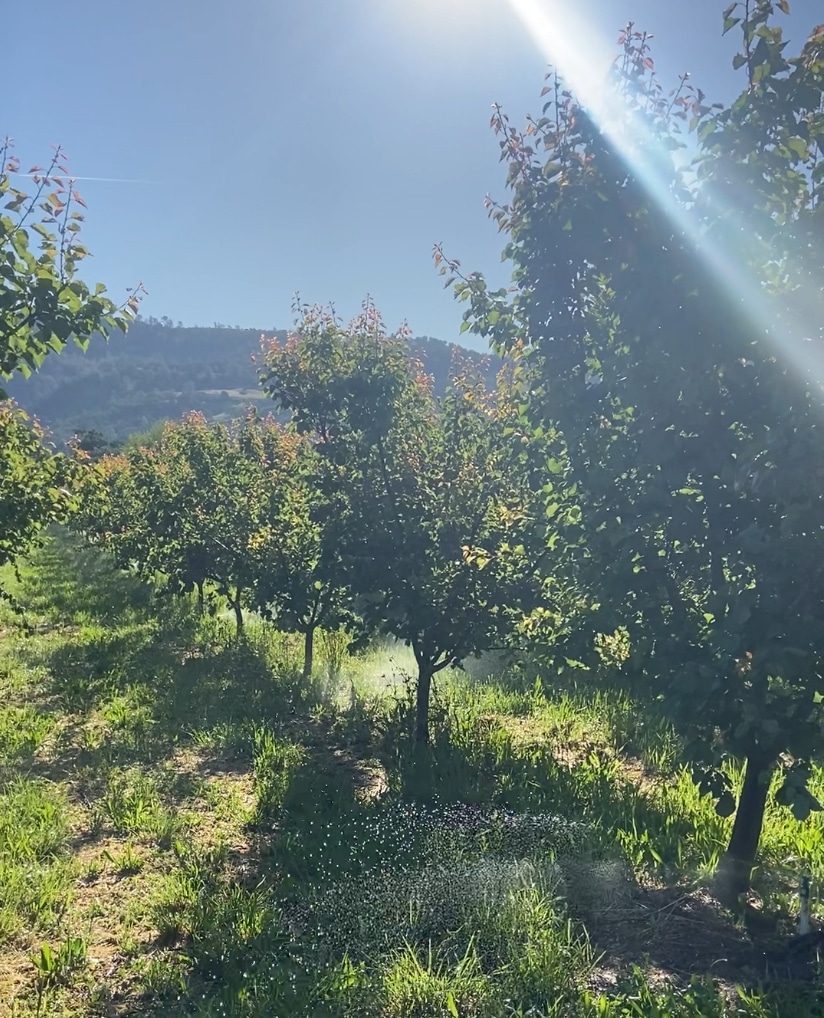
Arturo Gaxiola: My job is irrigating, the water. For example, we have several types of sprinkler right now: one type is the drip line like we use in the grapes and now we are also irrigating the peaches with special permanent drip lines. They are above the ground, with little sprinkles in between every two trees. I think the fruit is going to be better.
News From the Farm
In 2002 I wrote to CSA members about Richard’s Barn, the 40-foot tall redwood barn that towers over other buildings at Full Belly. It was built almost 100 years ago and was originally used to store hay for the dairy cows that once lived here. The redwood on this barn is beautiful, the kind of redwood siding that sadly, may never be seen new again by anyone on this earth.
Here’s a paragraph from the 2002 essay:
“When we first moved here, the barn was chock full of a lifetime of accumulated tools, gadgets, knick knacks, fertilizers, pesticides, seeds, screws, bolts, supplies and mysteries. It all belonged to Richard, who grew up on this farm and came by fairly often to check up on us (and look in on his barn). Dru once said that Paul spent more time talking to Richard than to her. After a while, we got a lot of Richard’s belongings out of the barn and moved them down to Richard’s walnut orchard, but we still always call it ‘Richard’s Barn’.”
Keep It Running Smoothly
Our CSA veggie box program is fortunate to enjoy the contributions of many people, from the volunteer drivers who take our boxes to the Charlotte Maxwell Complementary Clinic every week, to the site hosts who allow us to drop off boxes at their homes and businesses for our members to pick up.
Our pick-up site hosts often have dozens of members coming to their property to pick up boxes. Inevitably there are associated inconveniences, most of which can be avoided with a little bit of consideration by members.
Here are some CSA rules, to help keep things running smoothly:
1. Pick up your box only during the hours listed on our web site and sign-in sheet. These are the hours that the host has set. We do not guarantee the boxes past the designated pick-up times. No credit is issued if you arrive late to claim a box, but find none there.
2. Do not leave a mess!
3. Park in designated parking spots. Do not double park and do not block driveways.
4. Direct your questions to Full Belly, not to the host. Please don’t disturb the host.
5. Please notify us five days in advance if you would like to defer your box.
News From the Farm
Saturday March 16 was a banner day at Full Belly Farm: one of the earliest days in recent years that we were able to plant our first tomatoes. A crew of 8 carefully transplanted the tomatoes from their warm safe spot in the greenhouse out into open fields. ‘Open fields’ except for the fact that the beds that the tomatoes went into were carefully covered with black plastic to warm up the soil, and also, were covered with a special cloth to protect them from cold night temperatures.
The wonderful warm, dry weather that we have been enjoying is a mixed blessing when it comes this early in the spring. The dry spell started back in the winter when it should have been raining and because it hasn’t rained in so long, we have been able to get a lot of work done very efficiently – planting, weeding, and mowing the orchards! But we’ve also got the irrigation going already, trying to get water out to all the thirsty greens and cool-weather crops.
Farm News | March 11, 2013
Sometimes Seeing the Beauty
There is an eye with which we experience the world, an interaction between the object perceived and the observer. Often times two people looking at the same object or event can see very different things. It is a Confucius-like allusion that could be stated as: “What you see depends upon where you look,” or “how you look depends upon where you go,” or even “what you see depends upon how you know to see.” An eye trained with experience and wisdom might see an object or situation differently than a younger one trained in the same discipline. If ‘beauty is in the eye of the beholder,’ we may develop a collective eye for what is considered beautiful, or the appreciation of beauty may be as varied as cultures, sensibilities or each perceiver.
We had our Open Farm Day this weekend and had about 150 farm-curious come by to take a wagon ride, see the farm, have their kids run around, and/or listen to one of the partners squawk about fields, fruit trees, hedgerows for pollinator habitat or farm fertility. These subjects are not so glamorous, but are beautiful from our perspective, as we witness the complex textures of nature and the myriad forms of life that we are entrusted to consider as we go about the act of producing and exporting food from this land. No doubt, each visitor was looking at the farm and seeing the peach bloom, flower fields, and green crops of broccoli or spinach through their own lenses of appreciation, while the tour helped to inform what they were seeing.
News from the Farm | March 4, 2013
I just returned from a serendipitous Sunday Stroll around the farm with my six-month old grandson, Rowan. He was bumping along in the farm stroller as I pushed in any direction that the dogs were going, making my companion squeal in delight. The day was gorgeous – a quintessential one on the farm – with soft white clouds in the spring sky and a hint of rain coming in the air. Everywhere I looked today made me proud to be a farmer: clean neat rows of broccoli, arugula and spinach are bursting out of the dark earth in the fields next to the house; cover crops are everywhere, stretching out above and below the ground with nitrogen fixing vetch and oats that will soon be turned in for fertility for the summer crops; peaches and apricots are in their full pink and white regalia of blooms with bees buzzing thick in the air. Hours earlier we witnessed the birth of three baby lambs from a new ewe – yes, a very wonderful Sunday indeed here at Full Belly Farm.
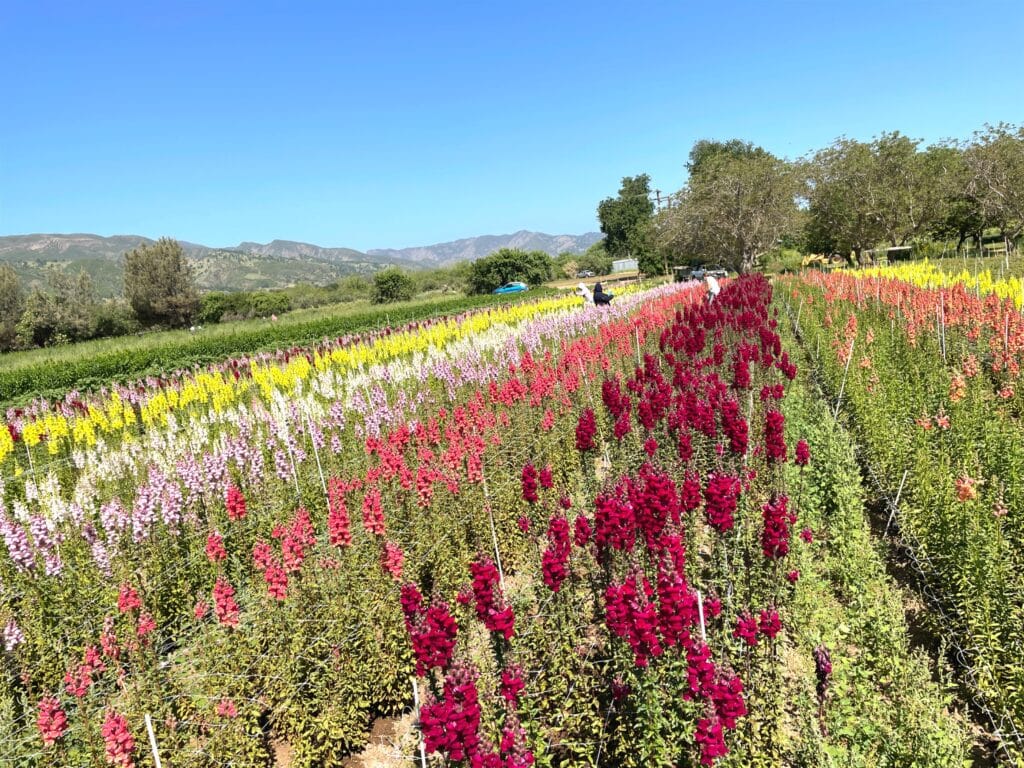
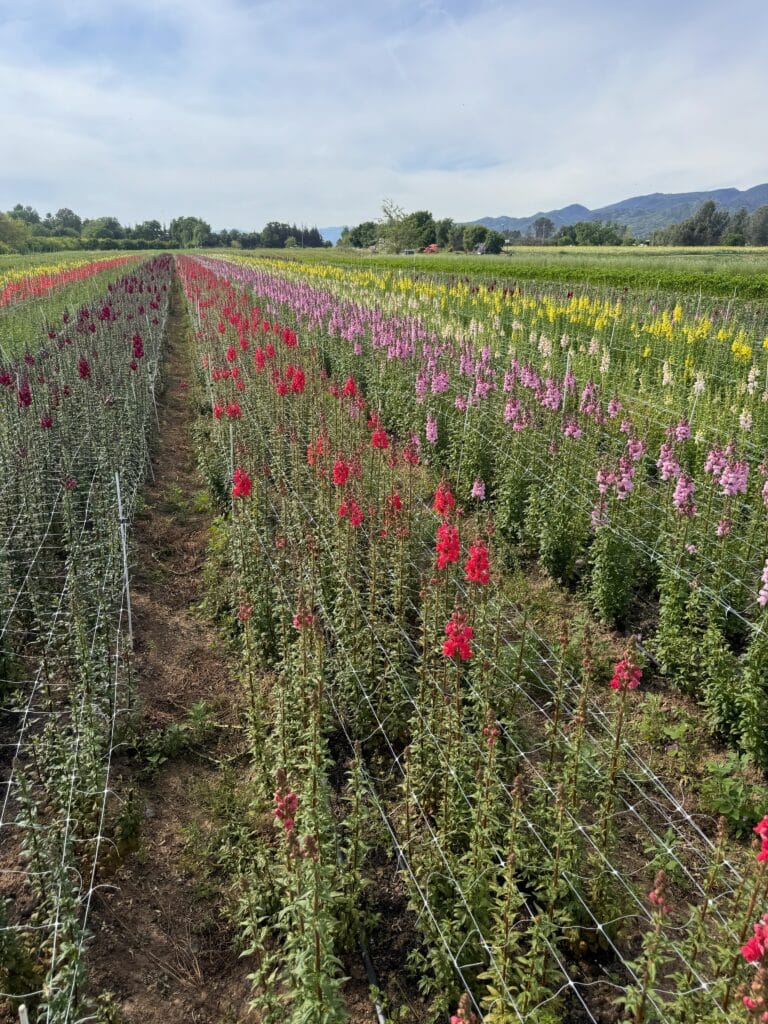
The walk was serendipitous because we eventually made our way to the flower fields where I was aiming to get some inspiration for this article to you about our flowers. And lo and behold a fire was lit under me to write a VERY urgent letter because my lord are we going to have a LOT of flowers this year! All together there are four acres of spring flowers planted. In the first field the Tulips are already a riot of color with Ranunculus and Anemones not far behind. The Snapdragons are all horizontally trellised along side the Godetias, and the Dutch Iris beds are jam-packed with green sword leaves gaining strength for the flowers to come in April. The Poppies and Wheat are waving young shoots up to the sky and Sweet Williams are just about to push out stalks of color as well. There are Canterbury Bells and Delphinium here in this field that have loved this warm spring weather and are doing better than I have ever seen – these will come in May and June with their glorious blues, whites and pale rose colors.
News from the Farm | February 25, 2013
The California Climate and Agriculture Network (CalCAN) had a big gathering at U.C. Davis recently and asked us how we think climate change has affected Full Belly Farm. Here’s how we answered:
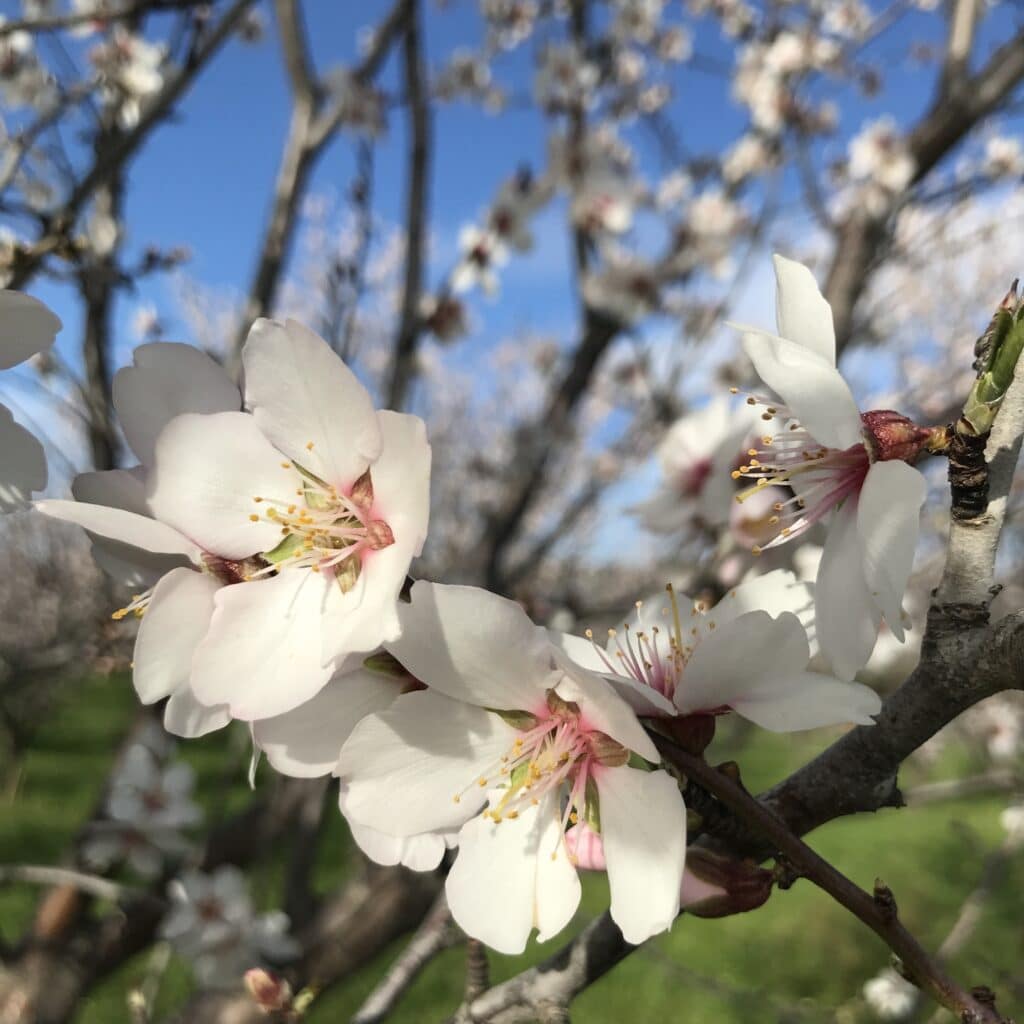
At Full Belly, our crop mix is very diverse – we sell fruits, nuts, vegetables and herbs pretty much every month of the year. As a result, we think and talk about weather continuously. It probably makes us a little boring! During the winter season we hope for rain because it means that we don’t have to irrigate and there will be plentiful water in the summer. In late February, when the almonds bloom, we are anxious in case bad weather makes it impossible for the insects to pollinate the almond flowers. Without their work we can have a complete almond crop failure.
News from the Farm | February 18, 2013
On Saturday March 9th we will have the first Open Farm Day of 2013 here at Full Belly Farm. The main activity of the day will be our visit to several corners of the farm riding on on a tractor-drawn trailer. We will make special stops at the asparagus to see how it is growing, and to pick some flowers from the colorful fields. The baby lambs are always a highlight of this early spring tour — the ewes are just starting to give birth this week! We may also visit our greenhouses which should be bursting with tiny plants, the compost pile, the pig pen and our mobile chicken coops!
News from the Farm | February 11, 2013
Our CSA project has always been fueled by many impulses and one of the most inspiring is the generous spirit of our members. Full Belly started making boxes years ago, in 1992. Earnest Partner discussions were only one element in the initial decisions. We also had a good friend, Beth, in Berkeley who organized the first delivery sites for us, managed member accounts, and still operates to this day, our most successful site in Albany.
One (one of many) of Beth’s most lasting gifts to our CSA community, was a connection to the Charlotte Maxwell Complementary Clinic (CMCC), a relationship which has continued to this day. The clinic is a “state licensed health clinic providing free complementary alternative medical treatments to low-income women with cancer” (from their web site). Their services include acupuncture, Chinese herbs, Western herbs, homeopathy, massage and therapeutic imagery.
News from the Farm | February 4, 2013
Farming is a fickle livelihood. I mostly point that out because I think that I like the words fickle and farming going together. Most farms across the country mix faith, hope and determination to develop their income stream—looking to minimize fickle. Most farmers plant in the spring when the weather is ‘just-so-right’ (“I thought that you Mr. soil would like to meet this rather cute-ish seed!”) hoping that soil and seed will hit it off in a warm enough environment to encourage a long term relationship. The stewarded relationship allows seed to sprout and send its radical down as a food-seeking anchor while the monocotyledon or dicotyledon (seed leaf) pushes skyward. This miracle of seed and soil and the matchmaking of the farmer can hit more than a few bumps. Too cold, too hot, not moist enough, wrong seed, wrong depth, too much rain or too little rain can make the introduction go sideways and strain the new relationship.
News from the Farm | January 28, 2013
Hi there, CSA members, let me introduce myself. My name is Tristan and I am the new intern here at Full Belly Farm. I have been here already for a whole three weeks. I came from the Monterey Bay area, having lived there for the past couple years. My experience with farming up until now has been minimal, and having just arrived to this new and welcoming place, I am reminded of what a farm is. A farm is far from “simple”. Even though I believe simplicity is what makes farming such a valuable pursuit – growing food in order for people to nourish themselves – a farm is very complex. It is an ecosystem by its own right. I have worked on two farms before this, and I can safely say that farming is unlike many jobs I have had due to its inherent nature. It combines work with living in such a way that it creates something unique and different from any other farm. Although each farm is producing food of some sort, it is also producing a culture, and a reflection of the space in which it is situated. It is a uniquely beautiful entity, a farm, no matter how big or small. And Full Belly is no exception.
News From the Farm | January 21, 2013
News From the Farm – The Annual ‘What You Ate Last Year’ Report
We provide this report every year, hoping to impress you (and ourselves as well) with the diversity and splendidness of the fruits and veggies that we were able to include in the boxes during 2012.
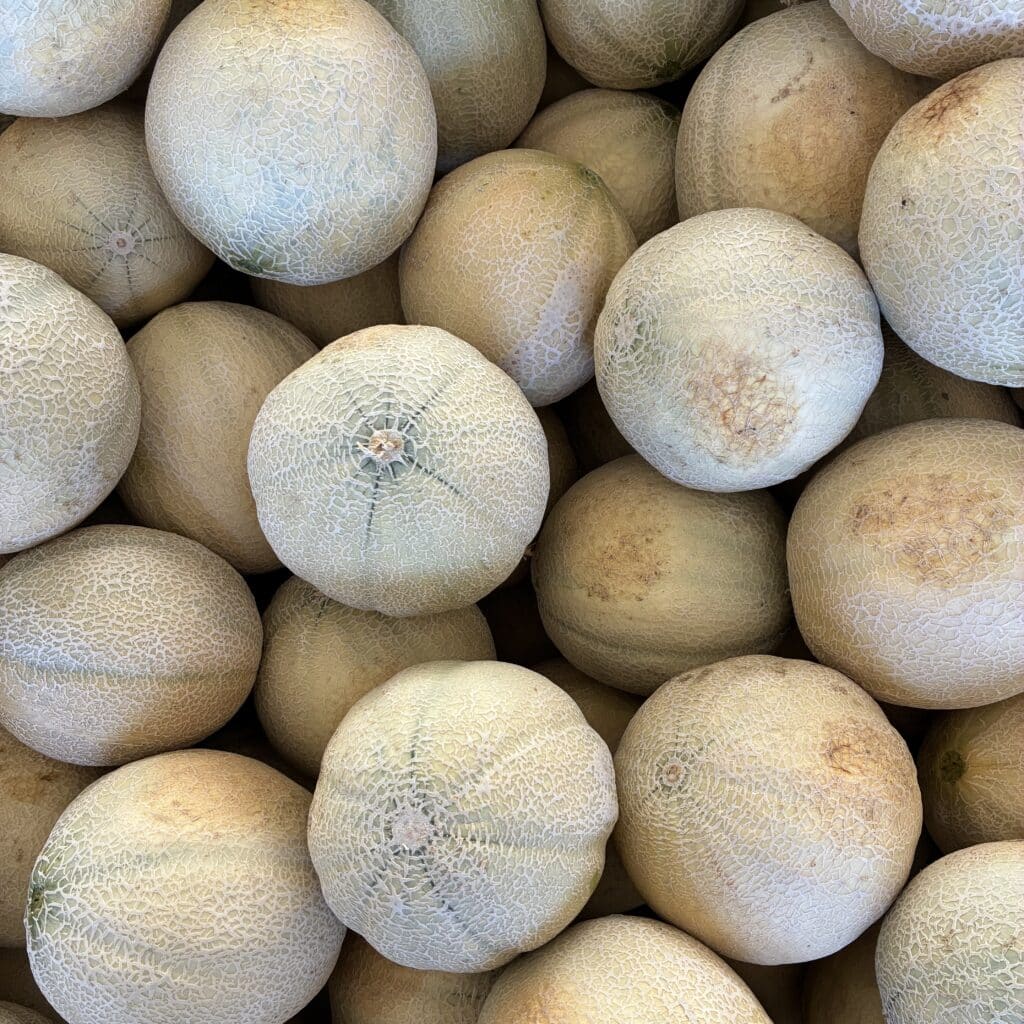
Let’s start with fruit! When Full Belly started our CSA, there weren’t many fruit trees at the farm. At first we purchased organic oranges from our neighbor during the winter to provide some citrus, but over time we have planted more and more fruit trees of our own, and your boxes reflect that. Here’s a review of the fruit that you ate if you got a weekly box in 2012: Melons – 14 times; oranges – 9 times; apples – 6 times, plus grapes, pears, strawberries, figs, peaches, pomegranates, apricots and lemons. If you got a box, there was some kind of fruit in it almost every week.
News From the Farm | January 14, 2013
Each year, new energy arrives at Full Belly Farm in the form on our apprentices. They arrive when we need them the most – in the early part of May when we are bracing ourselves for the onslaught of summer, in September when the summer rush has left us tired and cranky, or in January when we are rested and need to be reenergized. This year, we have been blessed with a tremendously talented group of apprentices: Ingrid, Tyler, Becca, Jordan, and Tristan. They join the ranks of over 300 apprentices who have been a part of Full Belly Farm over the past 28 years. As one of the ‘farm kids,’ it is always fun to think back on the many apprentices who have left their mark on Full Belly – and to see where they are today.
Jack Hedin and Jenni McHugh were at Full Belly in the early 1990′s. I remember them as the best kind of storytellers, animated and creative. They spent hours telling my siblings and I stories of adventure, and I vividly remember Jack reading my older brother Amon and I the entire Lord of the Rings series. Jack and Jenni are now farming in Minnesota, creating their own adventure story. They farm a beautiful piece of land in the small town of Rushford with their three growing boys and every so often we hear tales of their great successes and challenges. Their farm, Featherstone Farm, has been hit with floods and droughts but continues to inspire a new generation of farmers.
News From the Farm | January 9, 2013
While many holidays during the year pass the Farm by with barely a nod of acknowledgement from the busy fields, our farming cycles coincide well with year-end holiday traditions. The end of the year is a good time for reviewing the 12 months that we just passed through and the four seasons coming up. We are closing last year’s accounts and opening up those for the new year, both literally and figuratively.
Together we can review the crops that we liked, versus those that weren’t as well received, or didn’t work out as well as we had hoped. Plans for new building and landscaping projects seem to bubble up with new strength. Experiments for our spring fields get hatched and take root. We think about ways to build even better soil, grow even more flavorful fruit, and organize an even more harmonious and attentive work environment. We resolve that we will make this a year of no accidents at work, a year in which all the farm animals will be completely comfortable and happy, and of course a year when all the CSA boxes will hit a home run in your kitchen week after week after week!
News From the Farm | December 4, 2012
News From the Farm
A powerful winter storm passed over the farm last night bringing deep soaking moisture. By mid-morning, Cache Creek, running along the eastern border of the farm, had peaked at nearly 15,000 cubic feet per second, and was a fierce power, sweeping whole trees, piles of floating cattails, and debris past the farm at incredible speed. Our relationship with the Creek is a bit like having a semi-wild creature for a neighbor. We respect its beauty and marvel that it is a sanctuary for so many animals, birds and other life forms. Yet its power can be at times a writhing, churning, brown powerhouse, licking at bank edges, uprooting plants and trees, transporting millions of tons of sand, silt and gravel past the farm and to the basin near the Sacramento River. Within six hours the creek level rose from 2,000 to nearly 15,000 cfs, and 12 hours later was back down again — an astounding change.
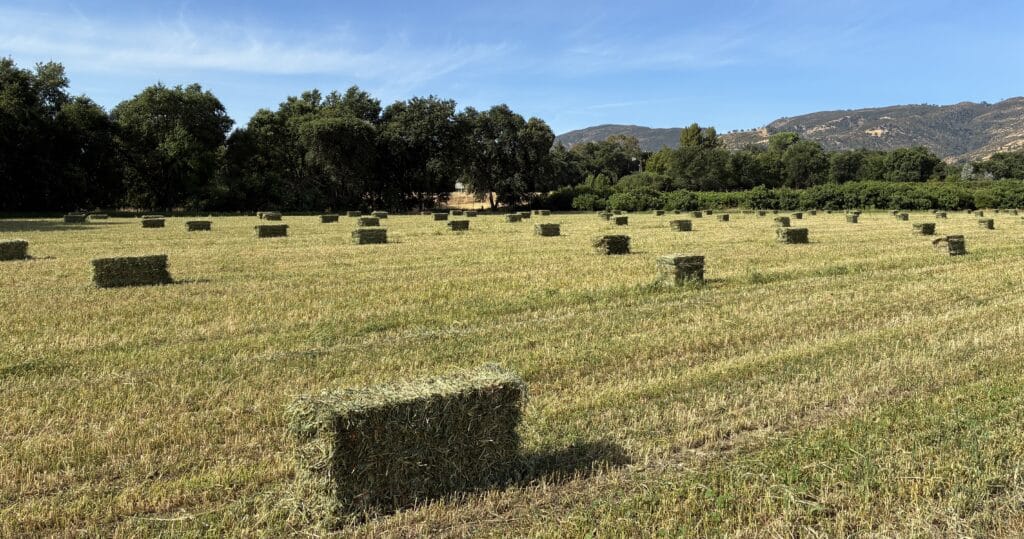
The value to the farm of such a downpour is substantial. This is the best weather start to a fall season in many years. Our wells are getting recharged as small feeder streams are running full. Walnut, almond, fig and peach orchards are storing moisture deep in the soil profile, lessening the need to pump water next summer. Winter hay and grain crops are lush and healthy, off to an early start, and now with reserves to root deep and withstand prolonged cold or dry weather that may come.